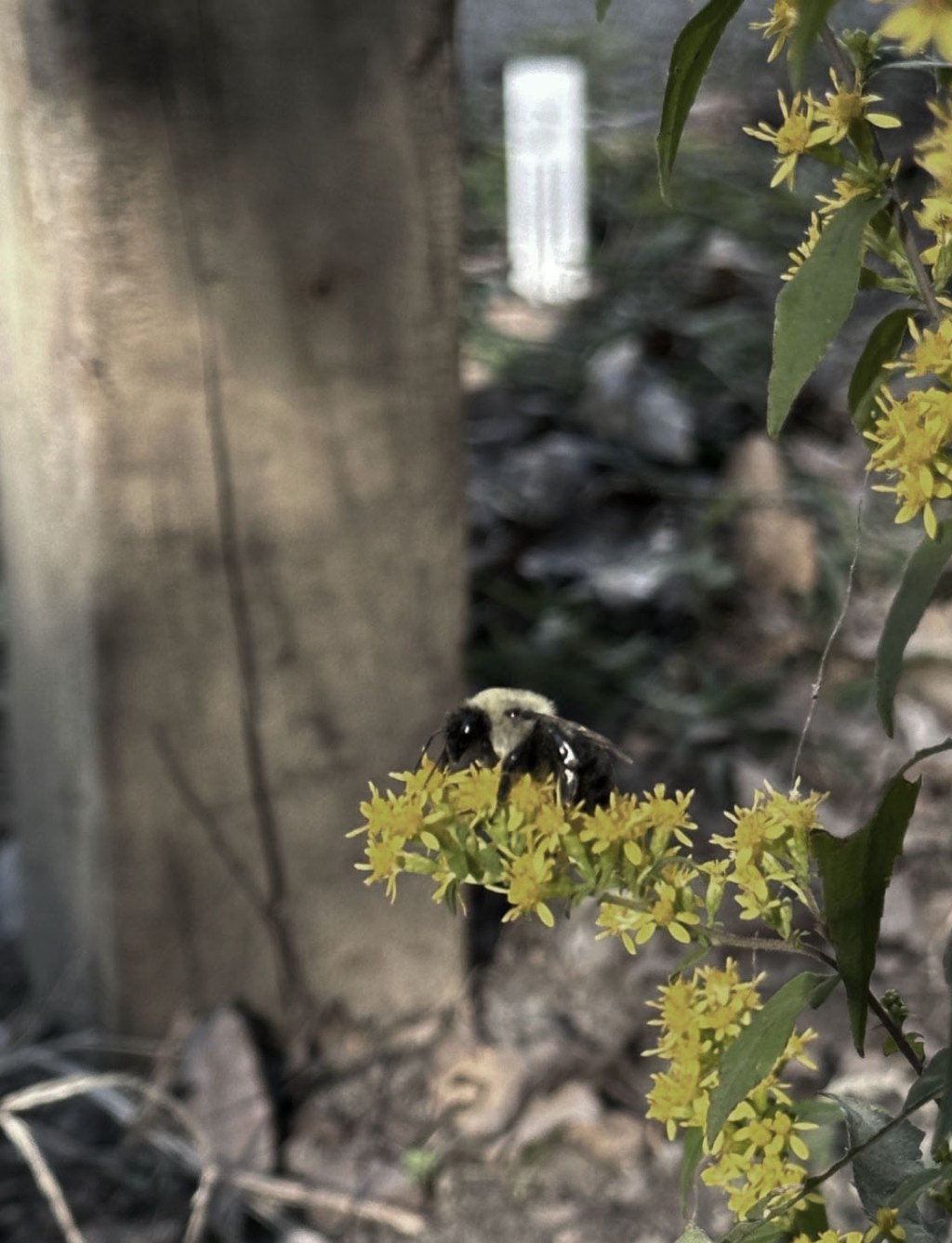
Reviewing: Specialist Bees of the Mid-Atlantic: Host Plants and Habitat Conservation by Jarrod Fowler (2016)
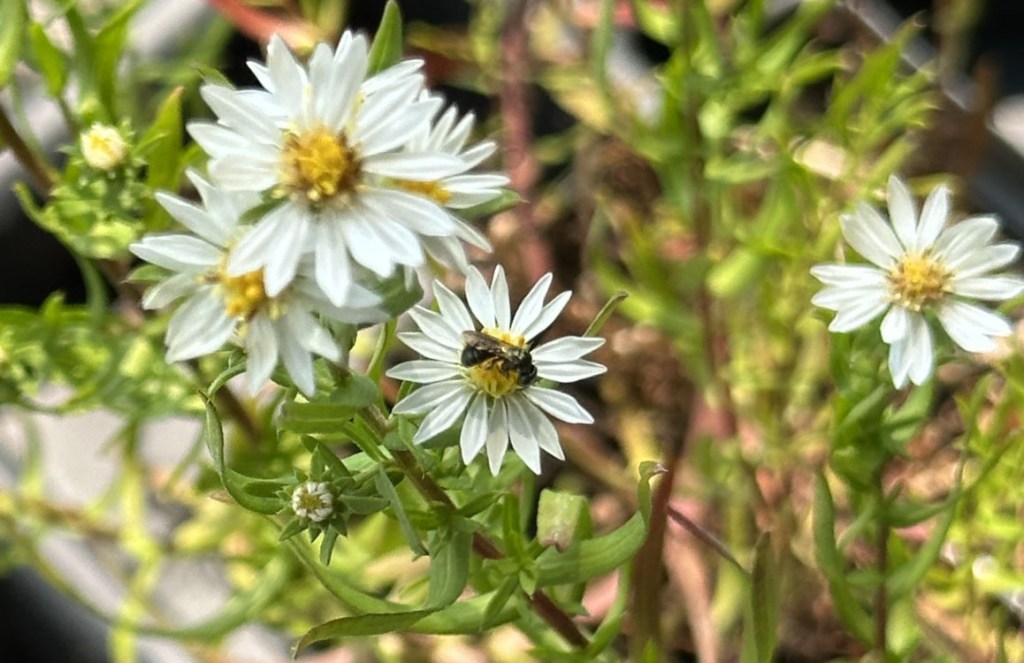
Key Takeaway 1: Approximately 29% of native bee species in the Mid-Atlantic region are pollen specialists, which means they can only rear their young on pollen from specific plants.
Key Takeaway 2: In order to contribute significantly to supporting bee biodiversity, native plant gardens should include the host plants of specialist bees.
Published in 2016, this scientific article was the first to catalogue native pollen-specialist bees and their associated host plants in the Mid-Atlantic. Specialist bees, for the purposes of this article, were defined as bees that can only rear their young on pollen collected from a particular family, genus, or species of plant. Too often, pollinator-friendly seed mixes and pollinator gardens in general are designed to provide nectar for generalist bees using non-native plants. However, thanks to the work of Jarrod Fowler and other talented researchers we now know our pollinator gardens can do so much more than just provide nectar. We can contribute to the preservation of bee biodiversity by planting for the specialists.
Who should read this article?
The intended audience of this article was commercial native plant propagators. However, if you are already a native plant gardener and an avid consumer of more scientific content you might enjoy this deep dive into the world of pollinator research. If you are newer to gardening or are short on time, I would recommend this website because it has similar information in a more condensed format: https://www.usgs.gov/centers/eesc/quick-background-mid-atlantic-regions-native-bees.
What’s covered in the article?
This article catalogues published records and expert observations of specialist bees on their associated host plants. The results are given in the form of several tables that pair host plants and bees in various combinations. To understand these tables I had to revisit the concept of taxonomic rank. In the hierarchical structure, family is the broadest category with genus and species being progressively more specific categories. For example, to describe a low bush blueberry in taxonomic terms you would use the format listed below.

As a gardener, I paid particular attention to the recommended plant genera. In a specific genus of plants only certain species will be local to my ecoregion. Of those plants, only some will be growable due to site specific conditions like soil type, moisture, and light requirements. This will allow me to pick the species of that genus that will perform best in my garden and support specialist bees. Choosing matching bee and plant species may be more specific than necessary. As the author states, “Bee species attraction to individual plant species within any genus likely varies based on resource availability, quality, and quantity” (Fowler 2016, 25).
The results showed that the most common genera that supported specialist bees were:
- Salix (willows)
- Solidago (goldenrods)
- Vaccinium (blueberries)
- Helianthus (sunflowers)
- Symphyotrichum (asters)
- Viola (violets)
- Oenothera (evening primrose)
Although this wasn’t a main part of the article, I wanted to share this strange tidbit. The author briefly discusses that supporting pollen-specialist bees will also support “cleptoparasitic” bees—bees that lay their eggs in the nests of other bees. These bees rely on other bee species to rear their young so they do not forage with the intent of collecting pollen. Cleptoparasitic bees represent 21% of the native bee species in the Mid-Atlantic. While cleptoparasitic bees do not gather pollen themselves, some of them parasitize pollen-specialist bees making them inextricably linked to the well-being of the pollen specialists. Centering the needs of pollen-specialist bees can be helpful for the cleptoparasitic bees, generalist bees, and many other pollinators that rely on native plants to feed and rear their young.
Where can I find this article?
The article is available in the publications section of the author’s website: https://jarrodfowler.com/.
Sources
Fowler, Jarrod. “Specialist Bees of the Mid-Atlantic: Host Plants and Habitat Conservation.” The Maryland Entomologist 6, no. 4 (September 2016): 2-40.

 The Native Plant Gardener's Notebook
Leave a comment