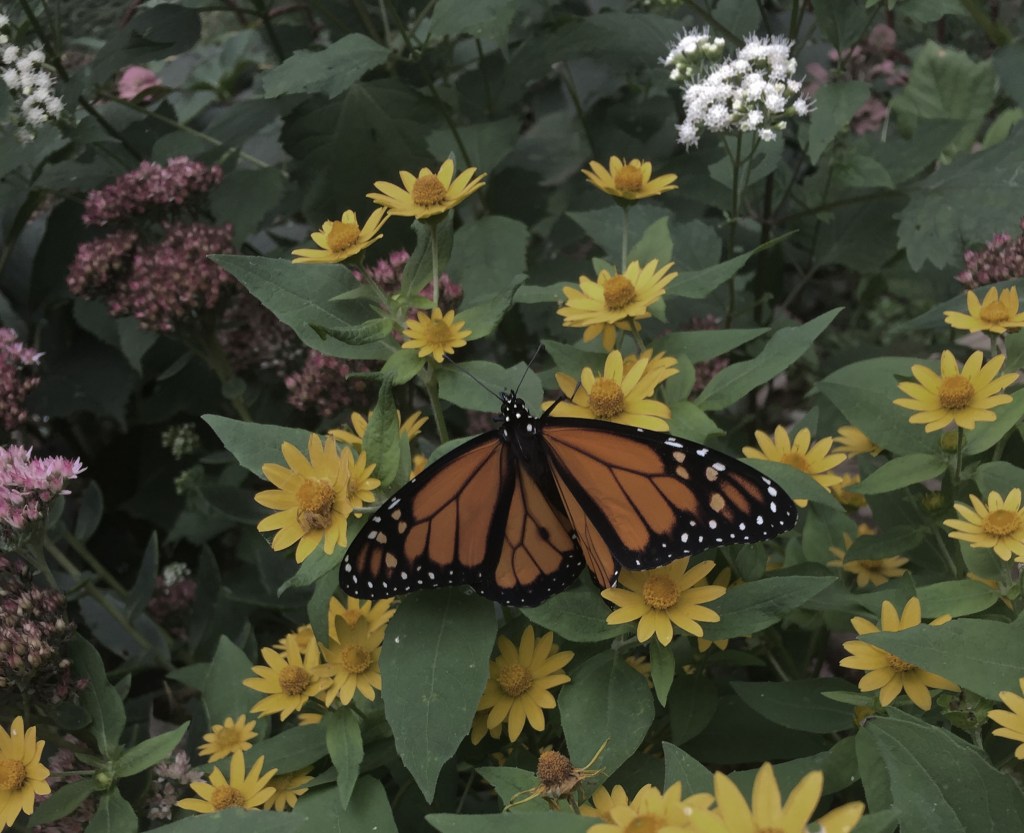
Reviewing: Bug Banter with the Xerces Society “A Monarch’s Life: Migration, Survival, and Barfing Blue Jays”
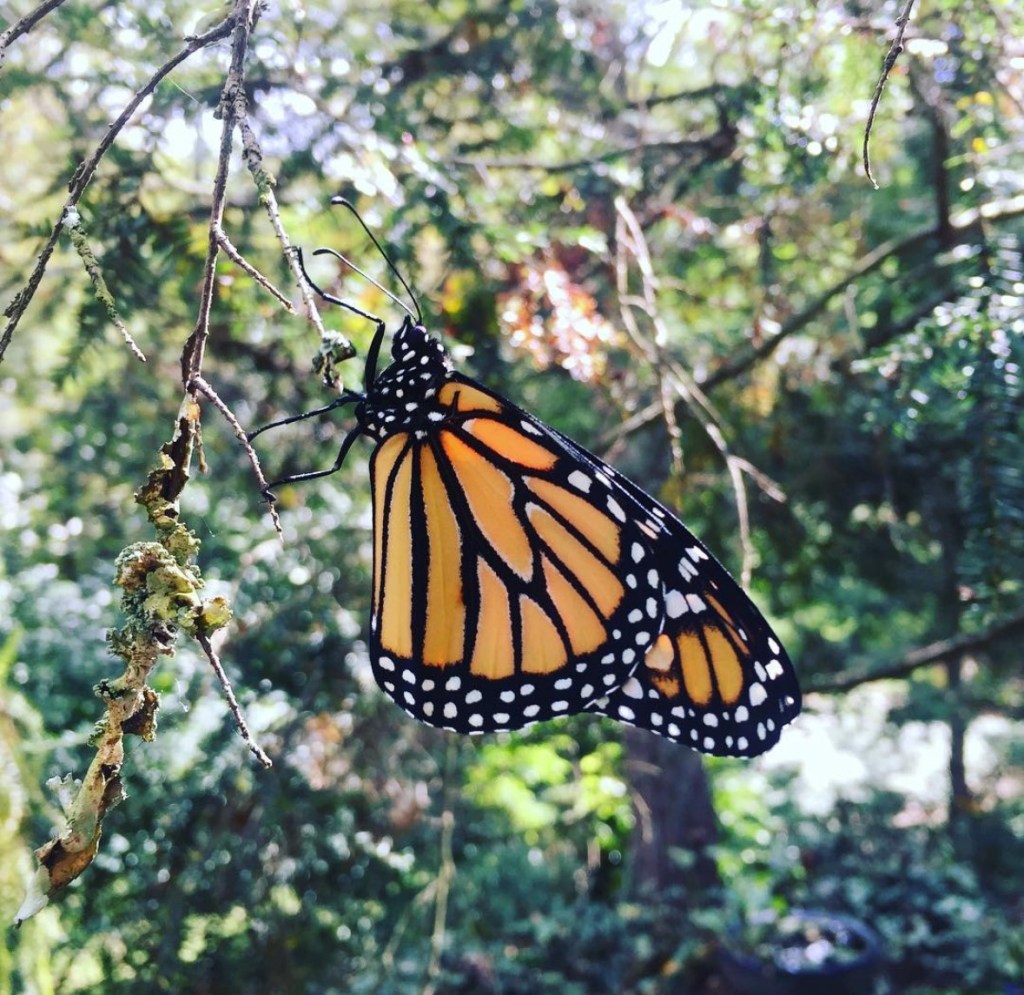
Key Takeaway 1: The Xerces Society does not recommend captive rearing of monarchs. Instead, they recommend creating habitat for butterflies with native plants that will provide food and nectar.
Key Takeaway 2: Late season nectar producing plants are especially helpful in assisting monarchs with the energy required for migration.
The Xerces Society started their podcast in October of 2023. The society is a nonprofit staffed largely by biologists that are focused on conserving invertebrates and their habitat. I was excited to hear about this podcast as I knew it would be a trustworthy source of information.
Who should listen to this podcast?
If you are interested in participating in monarch conservation, you’ll enjoy this podcast. Conservation practices have changed over time, and it’s helpful to have the most up to date information. The guest speaker, Dr. Ray Moranz, presents the scientific basis for these changes at a very accessible level.
Are monarch butterflies given too much attention as the mascots of pollinator conservation? Maybe so, but the conservation strategies presented in the episode will also support late season pollinators in general.
What’s covered in the podcast?
If you’re reading this, my guess is that you already know some of the basic facts about monarch migration. This episode delves a little deeper into the lifecycle of monarchs including how many generations it takes for monarchs to fly north, breed, and then fly south again. Dr. Moranz describes how monarchs lay eggs a few at a time until they’ve laid roughly four hundred, of which only four will survive to adulthood.
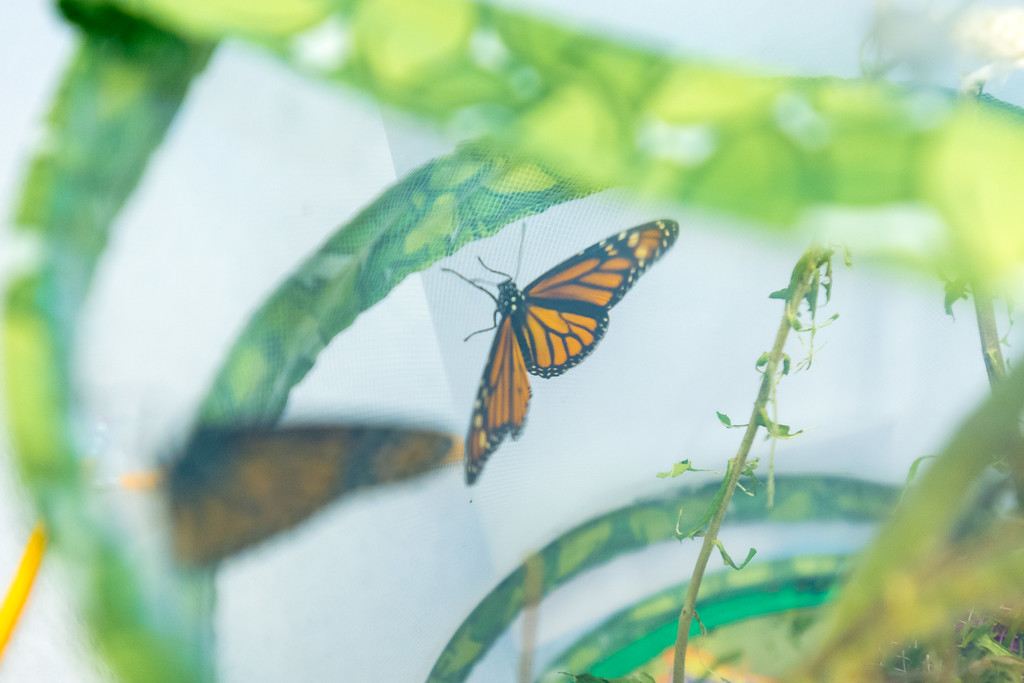
My favorite part of the episode is the thoughtful discussion around captive rearing. This typically involves raising monarch eggs or caterpillars inside a netted enclosure, feeding them milkweed leaves, and releasing them after they turn into butterflies. There are several reasons why this is no longer recommended:
- Captive rearing can easily spread diseases by keeping the growing monarchs in a smaller space.
- When the monarchs are released, they can spread these diseases to the larger wild population.
- Raising monarchs increases their overall survival above the natural survival rate of one percent.
- In a typical suburban landscape dominated by turf grasses and nonnative plants, there may not be enough habitat to support the additional butterflies that survived to adulthood as a result of captive rearing.
While raising a few eggs to adulthood is fine as an educational experience, be aware that this is not a conservation measure.
If you’d like to help monarchs, providing habitat is key. Dr. Moranz recommends growing milkweeds that are native to your ecoregion. He also stresses the importance of planting native plants that bloom late into the season like the asters and goldenrods pictured below. This will support the monarchs during their southbound migration in the fall.




Gardening with native plants can sometimes be laborious, especially if you are dealing with the removal of invasive species. Learning about the ways your garden impacts wildlife can be very motivating. I hope your garden journey includes monarchs and the many beautiful native plants that support them.
Where can I find this podcast episode?
Sources
Ray Moranz, ” A Monarch’s Life: Migration, Survival, And Barfing Blue Jays” interview by Rachel Dunham and Matthew Shepherd. Bug Banter. Podcast audio. December 4, 2023. https://xerces.org/bug-banter/monarchs-life-migration-survival-and-barfing-blue-jays.
Vance, Eric. USEPA Photo by Eric Vance. October 2014. Photograph. Wikimedia Commons. https://commons.wikimedia.org/wiki/File:Monarch_Butterfly_(15599798371).jpg.

 The Native Plant Gardener's Notebook
.jpg)
Leave a comment